End-to-end product
ClauseHound
Designed and built ClauseHound — a pet-insurance decision engine that answers the four questions shoppers actually agonize over, from the insurers' own policy text, with the exact clause cited every time.
- Role
- Founder, Product Designer
- Timeline
- 2026
Discover · Research
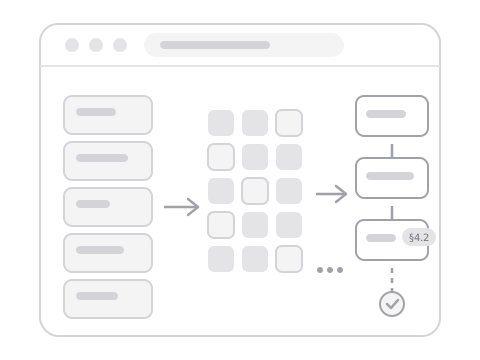
- Problem validation: owner complaints cluster around the same shapes — surprise denials (a 12-month orthopedic waiting period hiding in Section 4, found after the claim), premiums that multiply as dogs age, and exclusions discovered after purchase instead of before.
- The nuance shaping the product: shoppers don’t need another quote comparison — they agonize over four decisions. Insure vs. save, lifetime cost, will this claim get paid, and switching with a pre-existing condition: that’s the job ClauseHound is built around, each answered from the insurers’ own policy text.
Define · Problem
The pet-insurance question was never ‘which quote is cheapest.’ It’s ‘will this claim get paid — and what will I have spent by the time my dog is twelve?’ Policies are written to be unread: waiting periods, exclusions, and age-based premium hikes hide in the fine print until they cost you. Built as a Bernese owner who has read her own policy’s exclusion section the hard way, ClauseHound reframes the job: decisions answered from the insurers’ own policy text, with the exact clause cited — and an honest ‘I couldn’t verify this’ when the text doesn’t cover it.
Develop · Design
Four concepts, converged from the research — each one built so the agent can never guess.
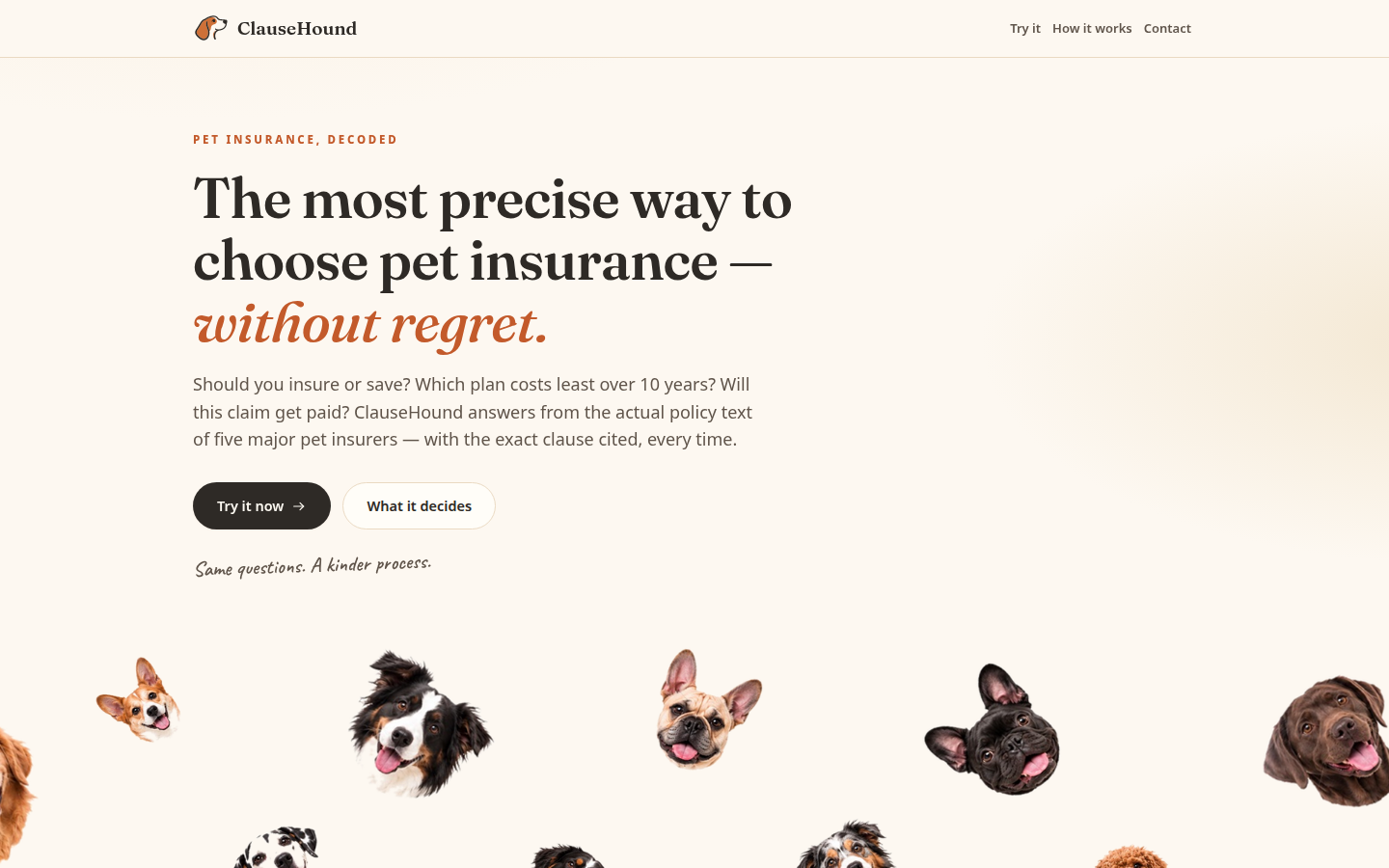
Decisions, not a chat box
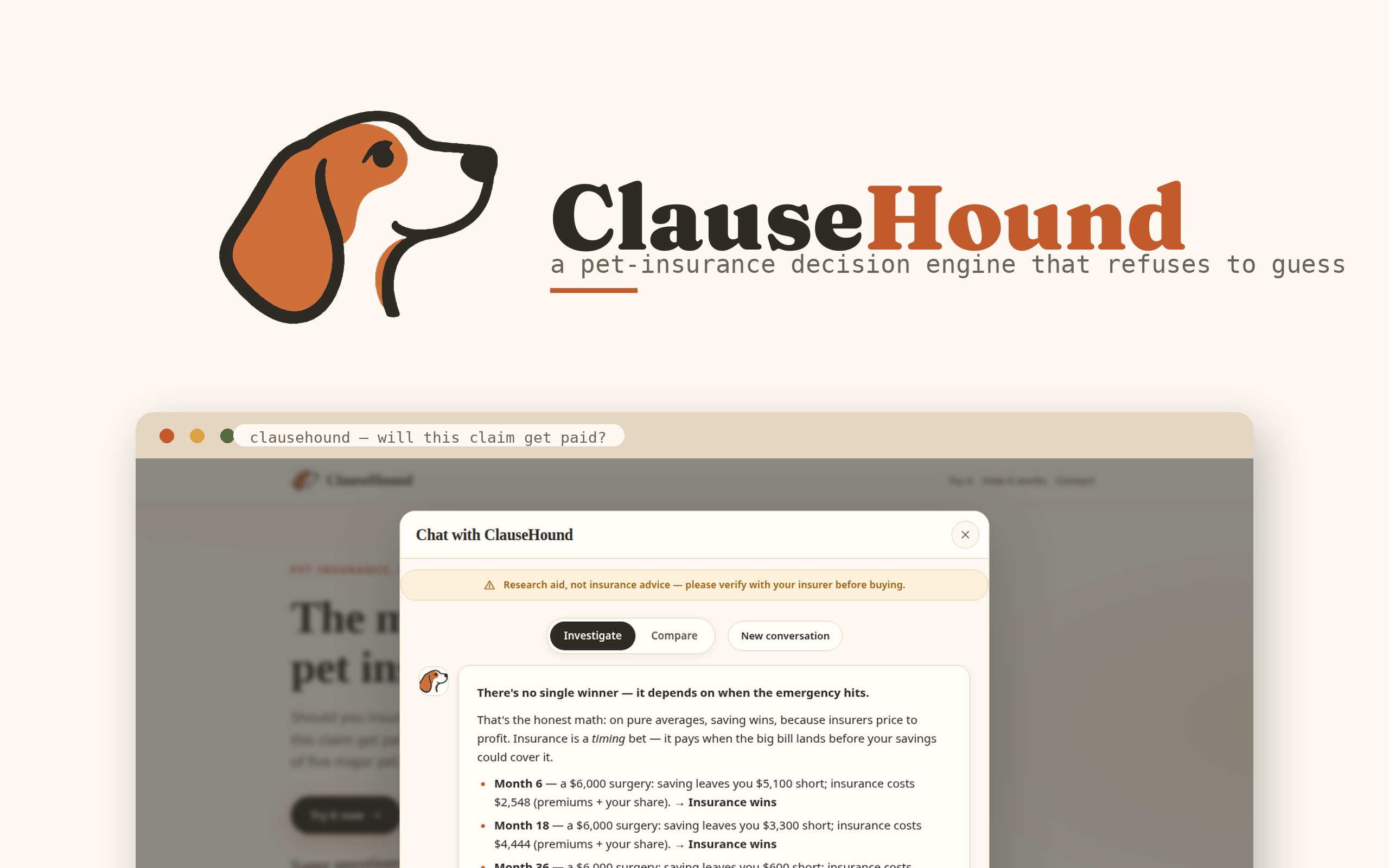
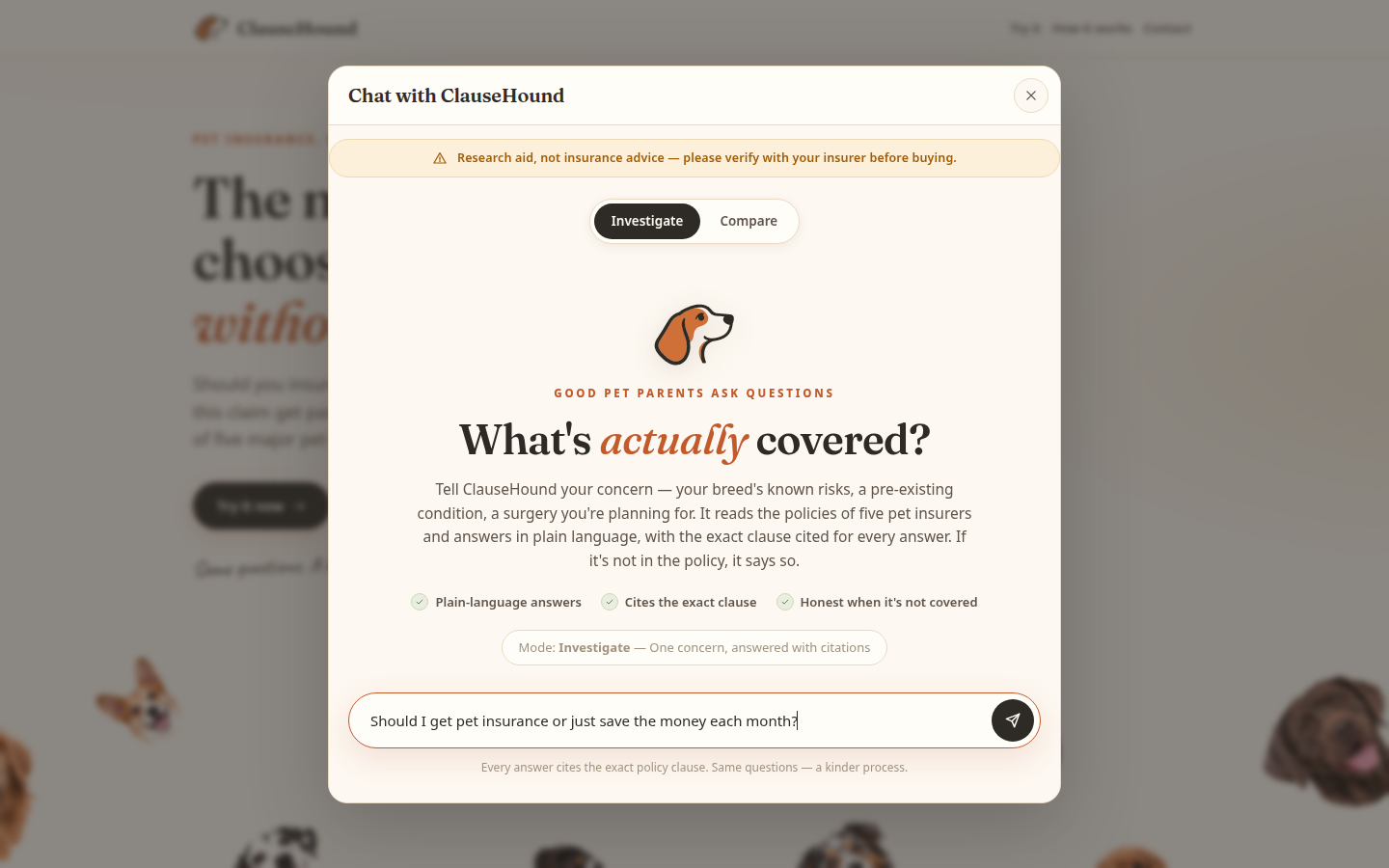
The landing page frames the four decisions, not an empty chat box. Each job card opens the chat in a modal with its question already prefilled — you press Send; it never auto-sends. The conversation never leaves the page’s context.
Verdict first, then the work
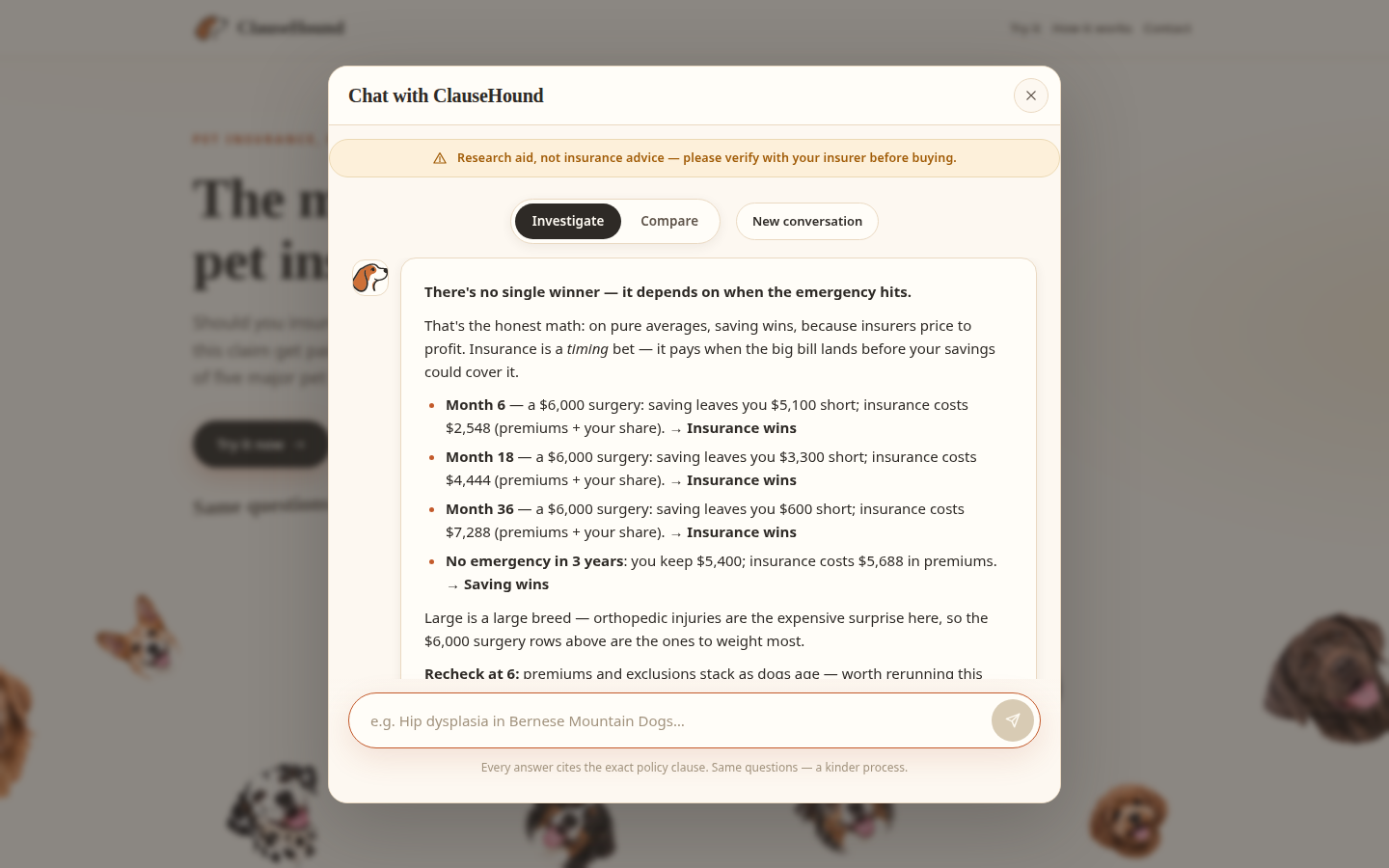
Every answer opens with the decision, then shows its work. For insure-vs-save, the honest verdict: “There’s no single winner — it depends on when the emergency hits.” Insurance is framed as a timing bet, not a product pitch — and the agent says “save” when saving wins.
Math the model never touches
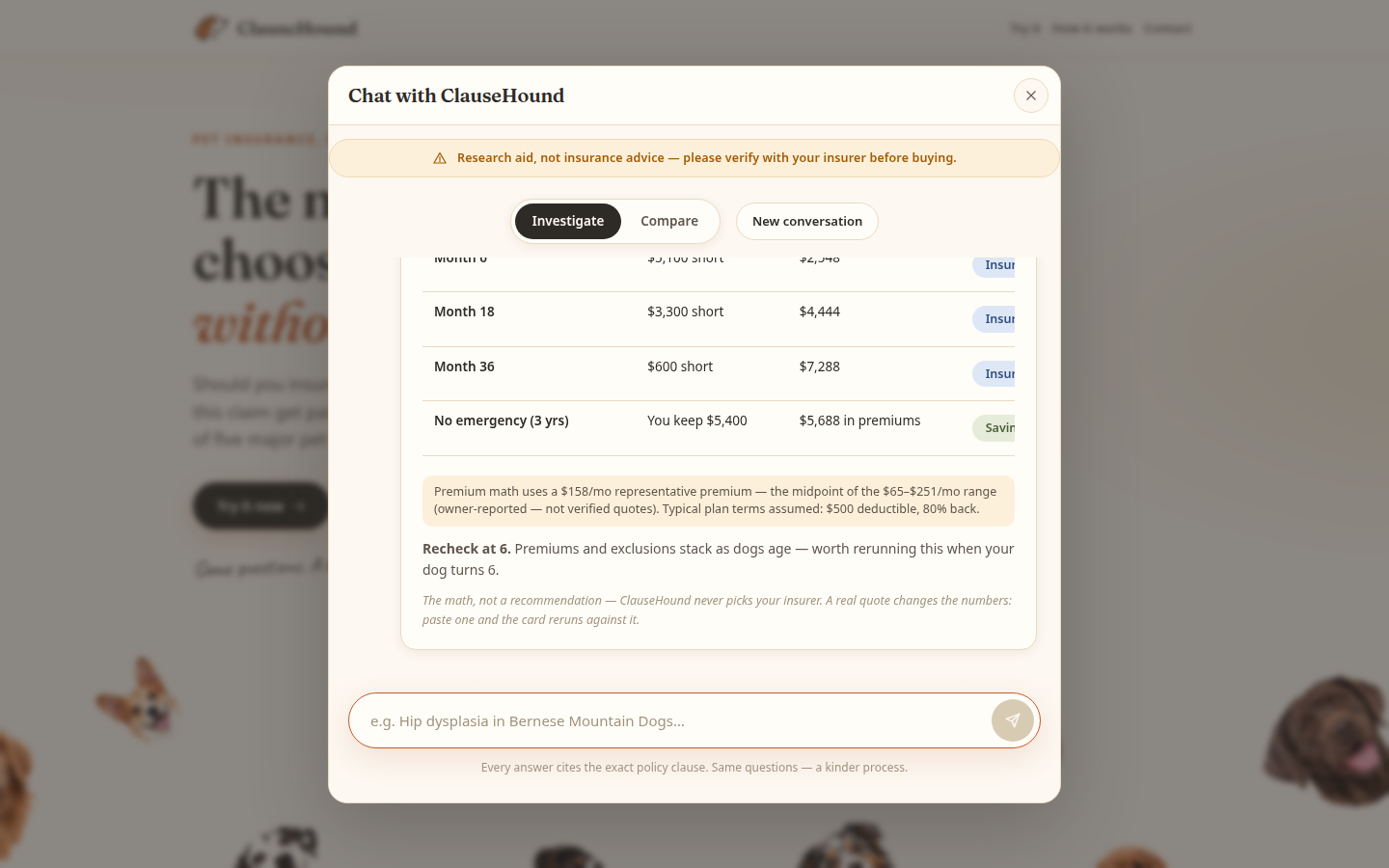
All money math runs in deterministic code, in integer cents — premiums, deductibles, reimbursement rates, annual limits. The LLM explains the numbers; it never computes them. Cost cards show month-by-month scenarios and 10-year projections, exact to the cent, with every assumption labeled: owner-reported figures stay visibly separate from verified policy facts.
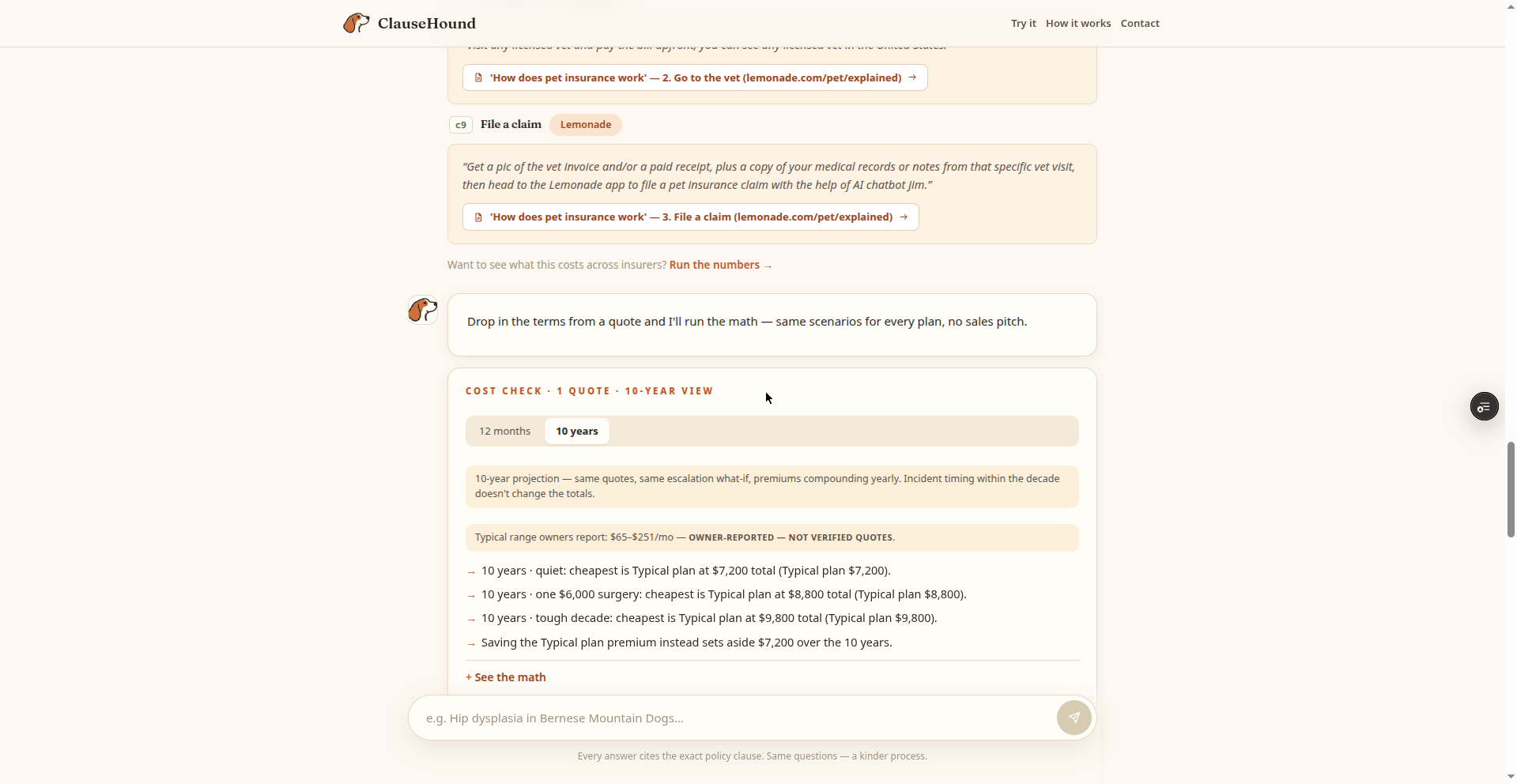
A contract you can see
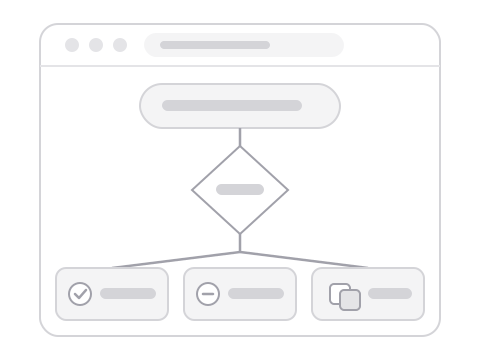
One grounding contract runs through every answer. Verdict first, citations follow. No evidence, no answer — “I couldn’t verify this in the policy documents” is a refusal, not a guess. Conflicts surface side by side, marked unresolved — the agent never picks a winner. And the pipeline narrates itself while you wait, so the grounding is visible, not just enforced.
Deliver · Next
- Shipped the two-decision funnel: Investigate (one concern, answered with citations) and Compare (quote math, side by side). The chat opens in a modal that never loses the landing context; job cards drop their questions in prefilled — never auto-sent.
- Held-out eval on the production build: 16 of 19 fixtures pass. The three failures are documented honestly — refusal discipline, thin alternative-therapy coverage, flaky conflict surfacing — with conflict determinism as the highest-priority fix.
- Next: the research keeps pointing at the premium age curve — what a policy costs by the time the dog is twelve, not just today’s quote. That projection is the next decision job.